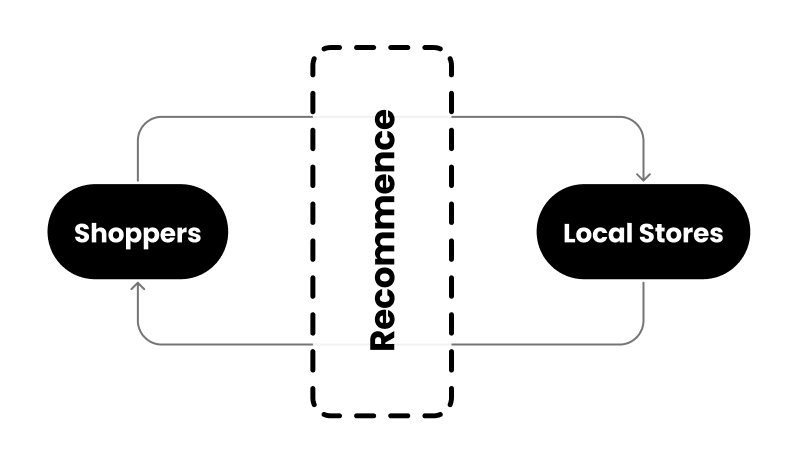
Recommence is the parent company behind Shoppermo, focused on transforming high street shopping into a connected digital discovery experience. Its vision is to help local shops become more visible, interactive, and commercially competitive by bridging the gap between physical retail and online consumer behaviour.
Due to confidentiality, I could not share detailed information in this document publicly.
How it works
Recommence tries to fill the gap between local stores and shoppers by connecting them through a discovery platform. This platform uses many tools and methods to address pain points and create opportunities for both stores and shoppers.
Shoppers spend a lot of time on the street while shopping to find what they want. Based on statistics, it takes about 80 minutes on average, and in some cases it takes about 120 minutes, including walking between shops, browsing, trying on, queuing, and purchasing.
On the other hand, local stores, especially independent stores or not very famous brands, suffer from low foot traffic or just visitors, not shoppers. Also, big brands or chain stores are not successful in promoting all their products in-store, either properly or dynamically.
My approach
I studied the decision-making process deeply through the product we (my co-founder and I) built in Chichera many years ago, and the idea of Recommence was, in some ways, a mature version of that product.

The starting point was combining the data we collected through user research methods and surveys, and organising them with the decision-making process. In this way, we ensured we created a strong enough base, supported both practically and academically.
On the other hand, given the nature of the startups, we needed high-speed iteration and testing to deliver a market-fit product as quickly as possible. Having this structure helped us to have a bright enough lighthouse to guide us.
Early feedback was my main approach to achieving speed. After each iteration, we tested it and based on the results, started a new iteration.
Service design
There were two very important points in designing the service: first, finding the fastest way to create a perfect cycle that works and builds traction (to get investment); second, keeping the structure as a functional, perfect system that can scale and support a wide range of users.
So, each product we built was a pillar of a scalable system that addressed a specific pain point, and these products together formed a complete cycle that could deliver value to both shoppers and stores.
We had 4 iterations; I prototyped and tested all of them and implemented the 3rd and 4th one. During each iteration, we learned and tried to make the next one better and better.
The figure below summarises our research and the first 3 iterations of users' and stores' pain points.
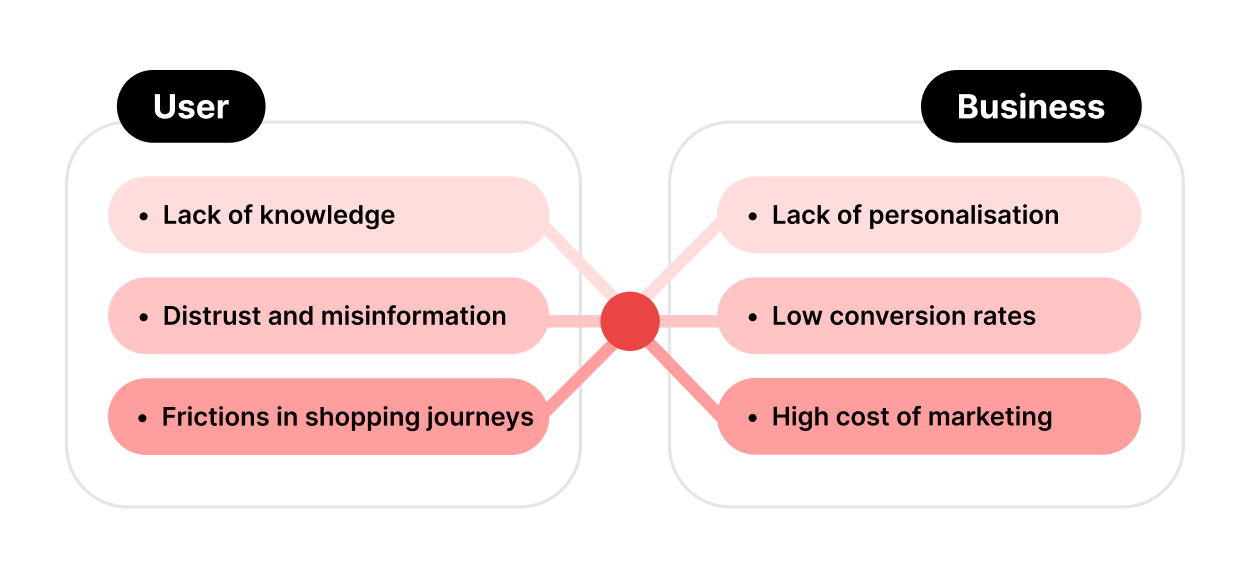
For users (shoppers):
Lack of knowledge: Most shoppers are not experts in the products they want to buy. For example, buying a laptop. On the other hand, this knowledge should not be purely technical; e.g., mattresses, it should include some information that is mostly experimental.
Distrust and misinformation: Product data and reviews are scattered across the web, particularly for electronic devices, and most of them serve marketing purposes. This problem gets worse even in non-electrical devices.
Frictions in shopping journeys: There is no difference between online shopping and in-store shopping. They are complex, time-consuming and erosive. The most important thing that is missing in both is satisfaction. This feeling is the key parameter for a shopping journey.
For businesses (sellers):
Lack of personalisation: Most marketing channels and audience-finding tools offer little flexibility. There is no way to target the people with particular features who need the specific product a store sells.
Low conversion rates: Most SME e-commerce and local stores are experiencing low conversion rates and are not very successful in converting visitors to buyers.
High cost of marketing: Marketing and user acquisition are always expensive (despite their performance and flexibility) and force business owners to be very conservative with their plan's results and execution.
Solution
During our journey, we decided to focus more on the fashion industry and on businesses; this approach helped us address the cold-start problem and made it easier to build traction. So in the 4th iteration, we add other products for fashion stores only.
This solution empowers stores to be more powerful and effective in the cycle. They can promote their products in the best way possible. During planning, we realised we needed a very strong incentive to convince stores more easily and offer a tangible feature in the short term. This incentive should have had 3 properties:
1- Low effort implementation
2- Fit perfectly in the cycle
3- Scalable
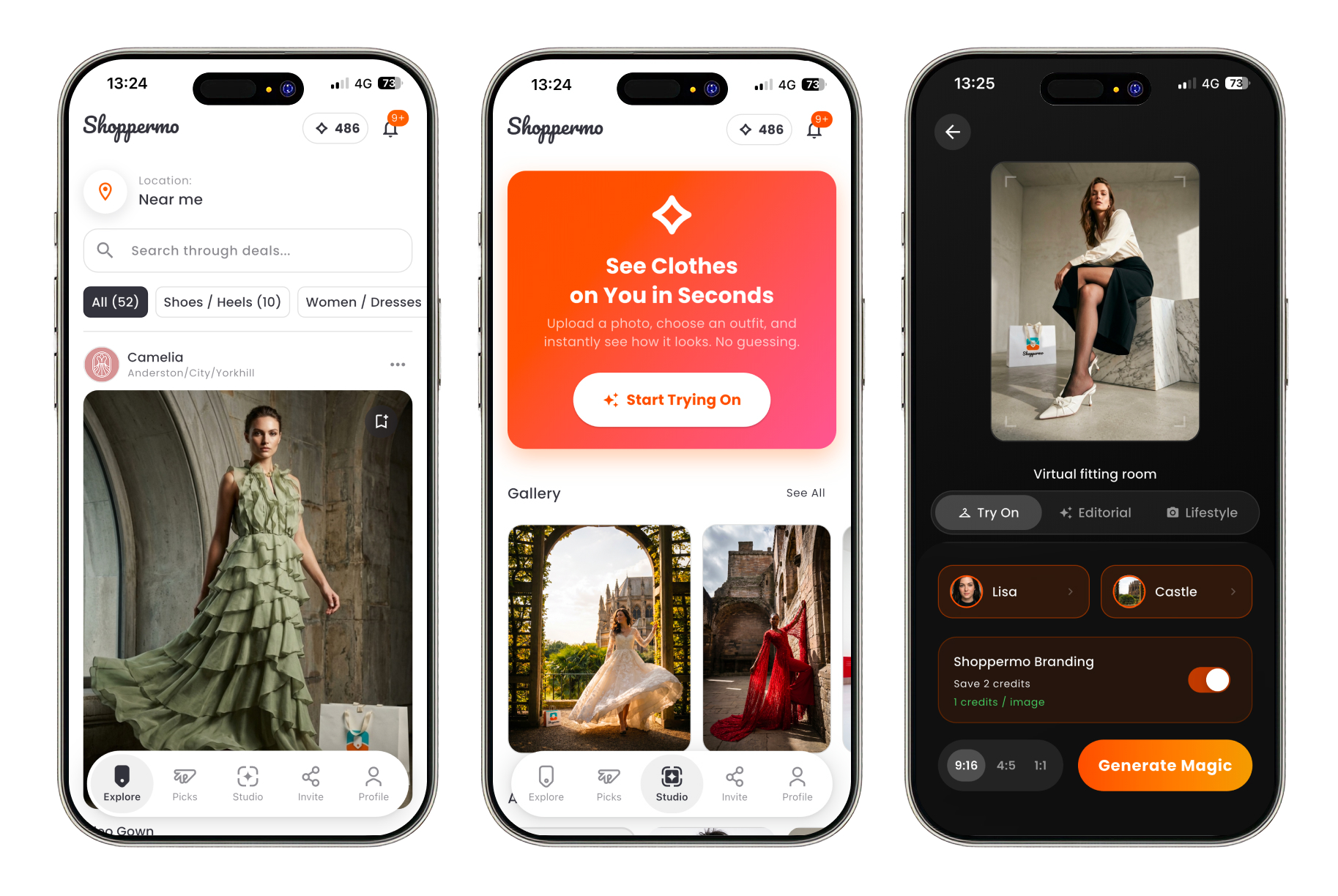
After comprehensive research and testing several ideas, we chose AI try-on. It perfectly fits the fashion product discovery use case; it was easy to implement using AI models and is easily scalable across different product types.
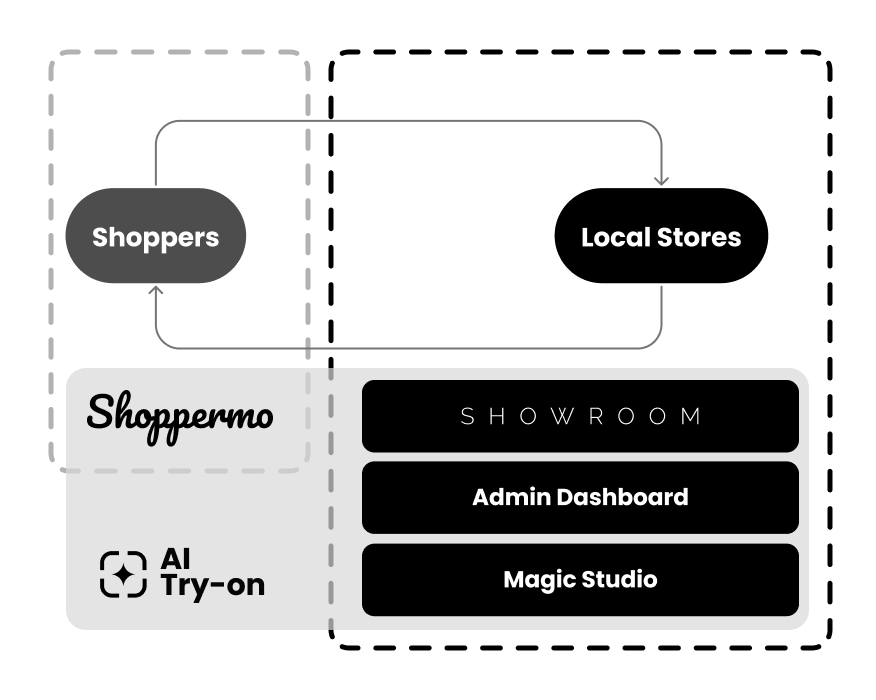
Shoppermo
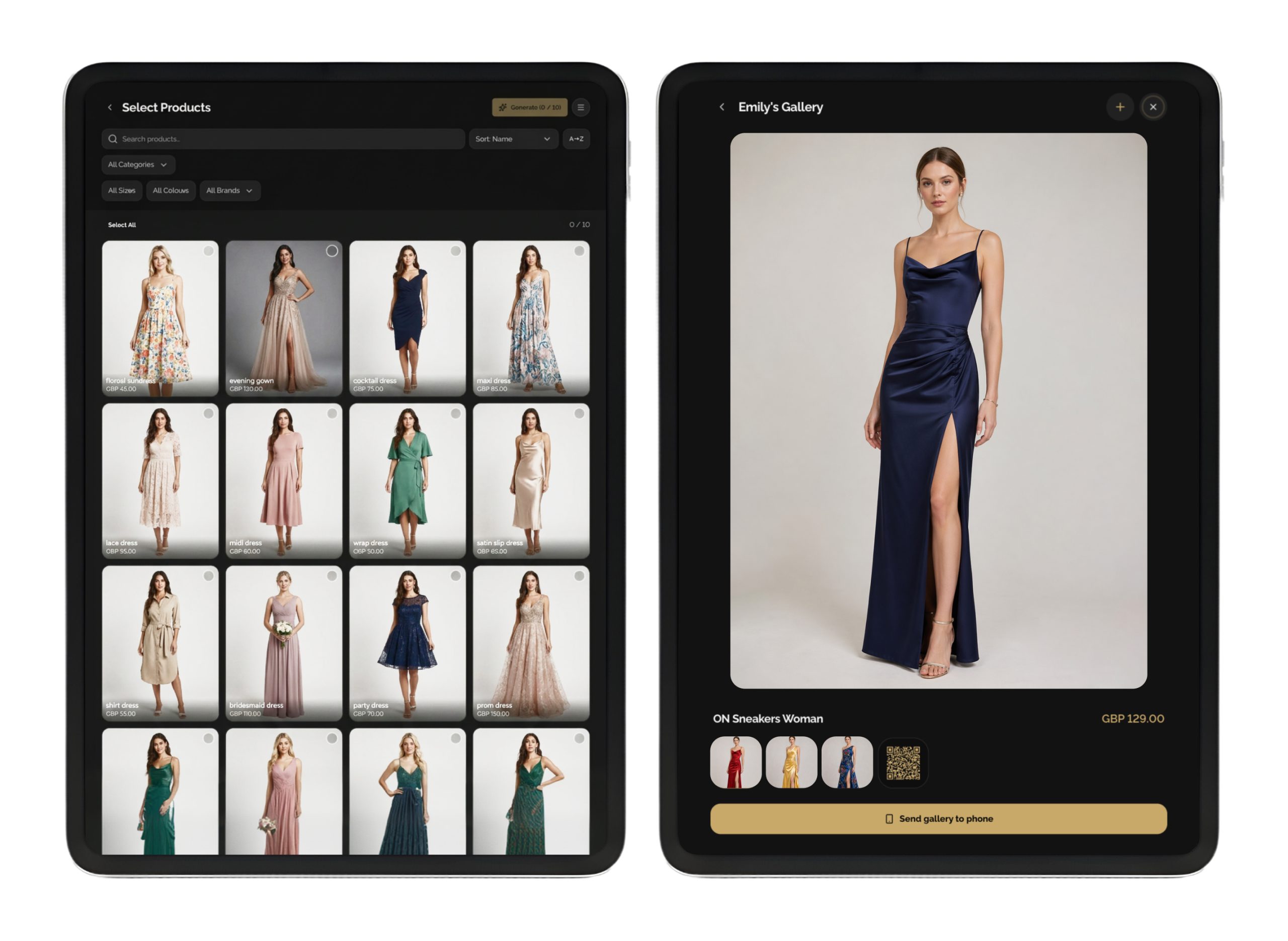
Is our main product that I talked about in detail here. It is for shoppers only, and through it, they can find deals nearby, try on clothes, and find their way to the store. It had other features too, but we kept them for the next versions.

Showroom
An exclusive app for high-value fashion that delivers a unique customer experience. It helps store managers to provide a smooth shopping experience for their customers with supervised try-ons. The whole process can be customised by the store’s condition and the owner's preferences.